Manufacturing & Distribution · 2024
PT Kebon Agung
PT Kebon Agung Corporate Website
Read more ↗Search strategies and engineering for the modern business landscape.
Six service pillars delivered by one team, from design and development to cloud, security, growth, and day-to-day support.
Legia streamlines how your application is tested and released to servers, turning a manual process only one person can run into an automated flow anyone on the team can repeat. The scope includes test environments, monitoring, and rollback mechanisms.
Pricing
Cost is based on the number of applications and environments whose release flow is streamlined. One-off work and ongoing support are billed separately.
> Project plan
DevOps & CI/CD · 5 stagesA general view of the order and length of each stage. A change in scope moves the estimate, and the details are agreed after the consultation.
After handover, Legia can continue to support you through a monthly support contract or a subscription maintenance scheme, or step away entirely once your team is independent.
Legia's full processTechnology
The tools actually used on this work. The choice adapts to the systems you already run rather than being forced into one mold.
Release flow
Tools that run automated testing and deployment every time code is updated.
Containers and infrastructure
Packages the application and writes its environment as code, so testing and production behave the same.
Monitoring
Records and monitors performance, then gives early warning before users report a problem.
Selected Work
Three projects that involved Legia's DevOps work, alongside their websites and security.
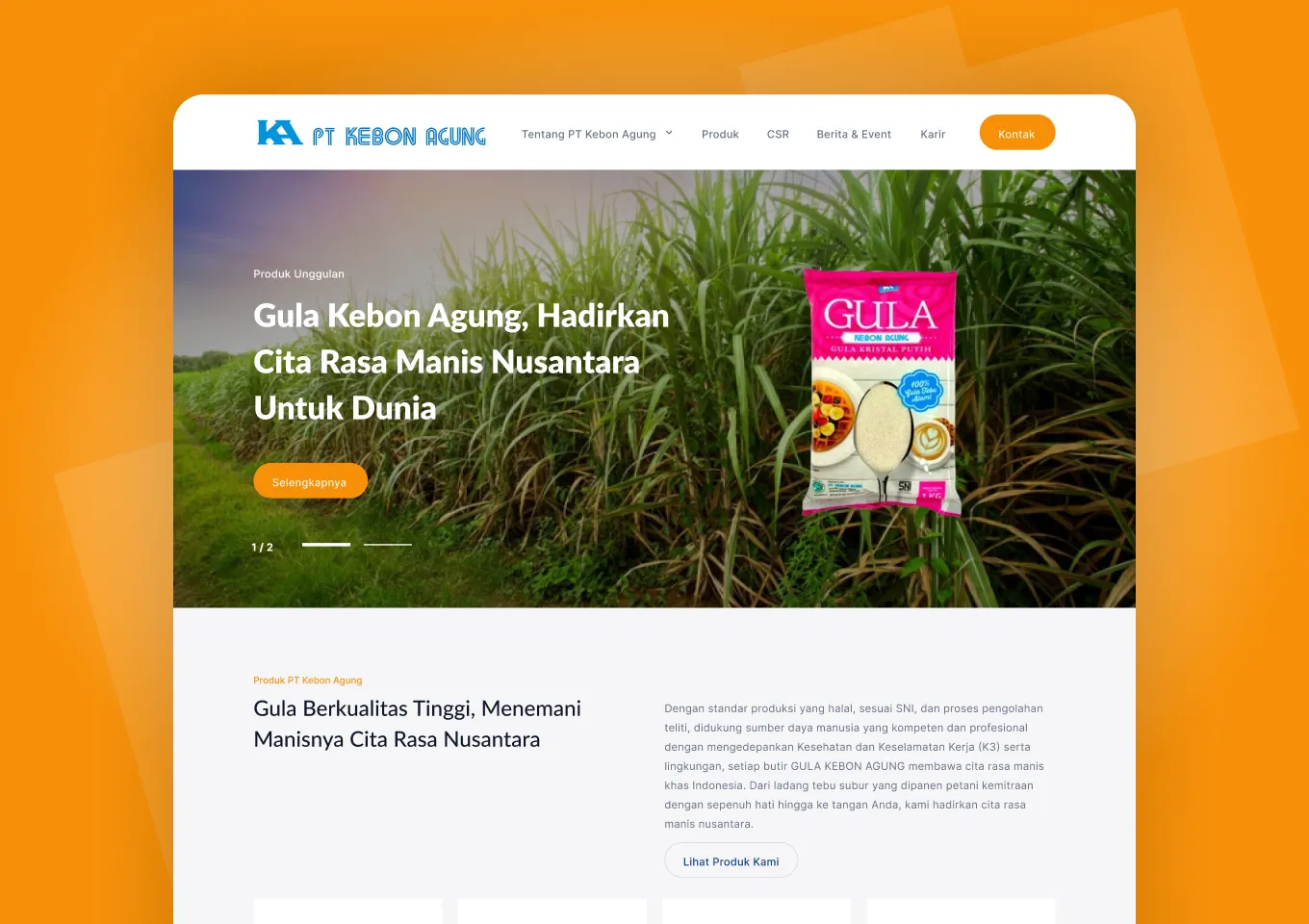
Manufacturing & Distribution · 2024
PT Kebon Agung Corporate Website
Read more ↗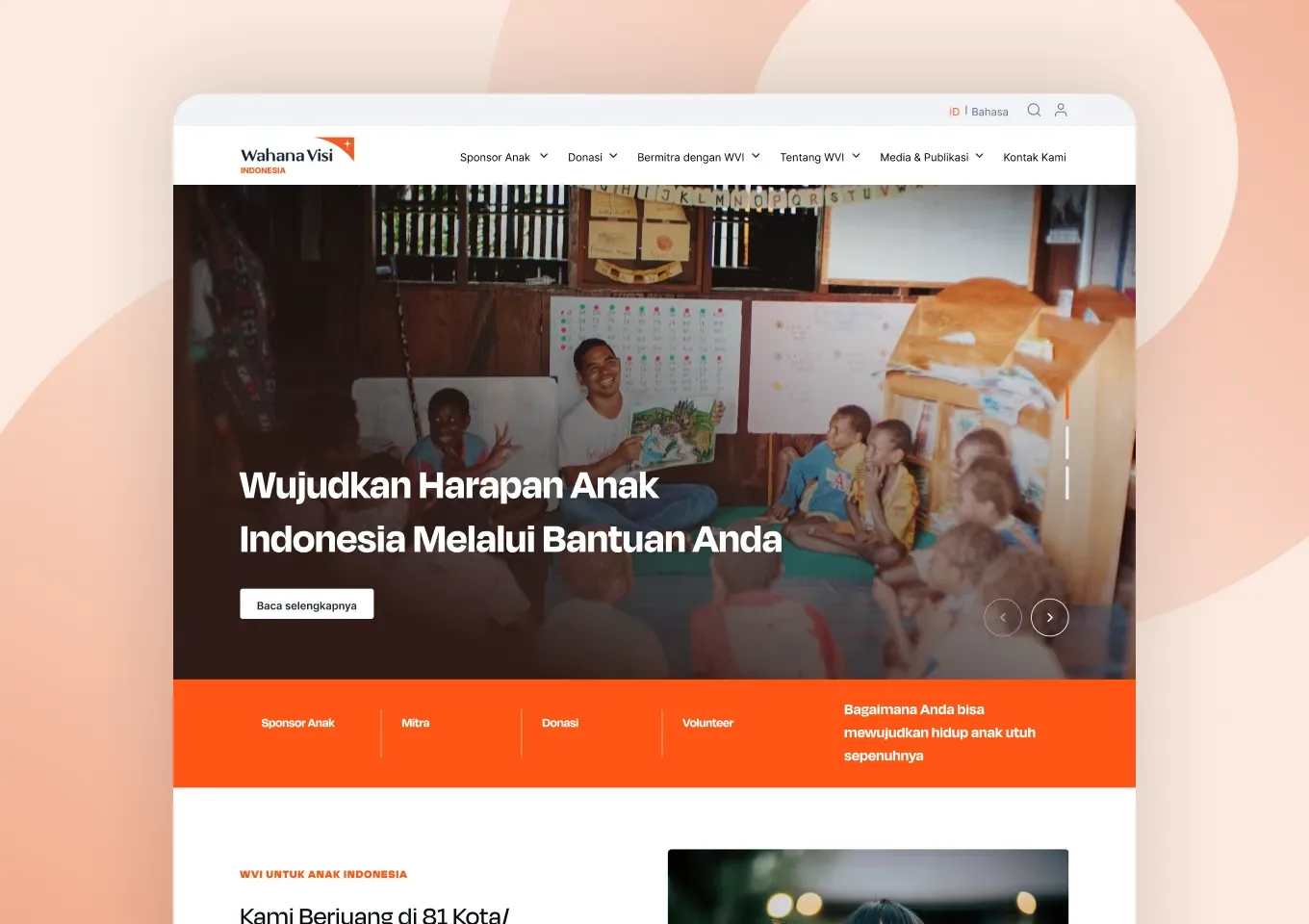
Non-profit · 2025
Wahana Visi Indonesia Website
Read more ↗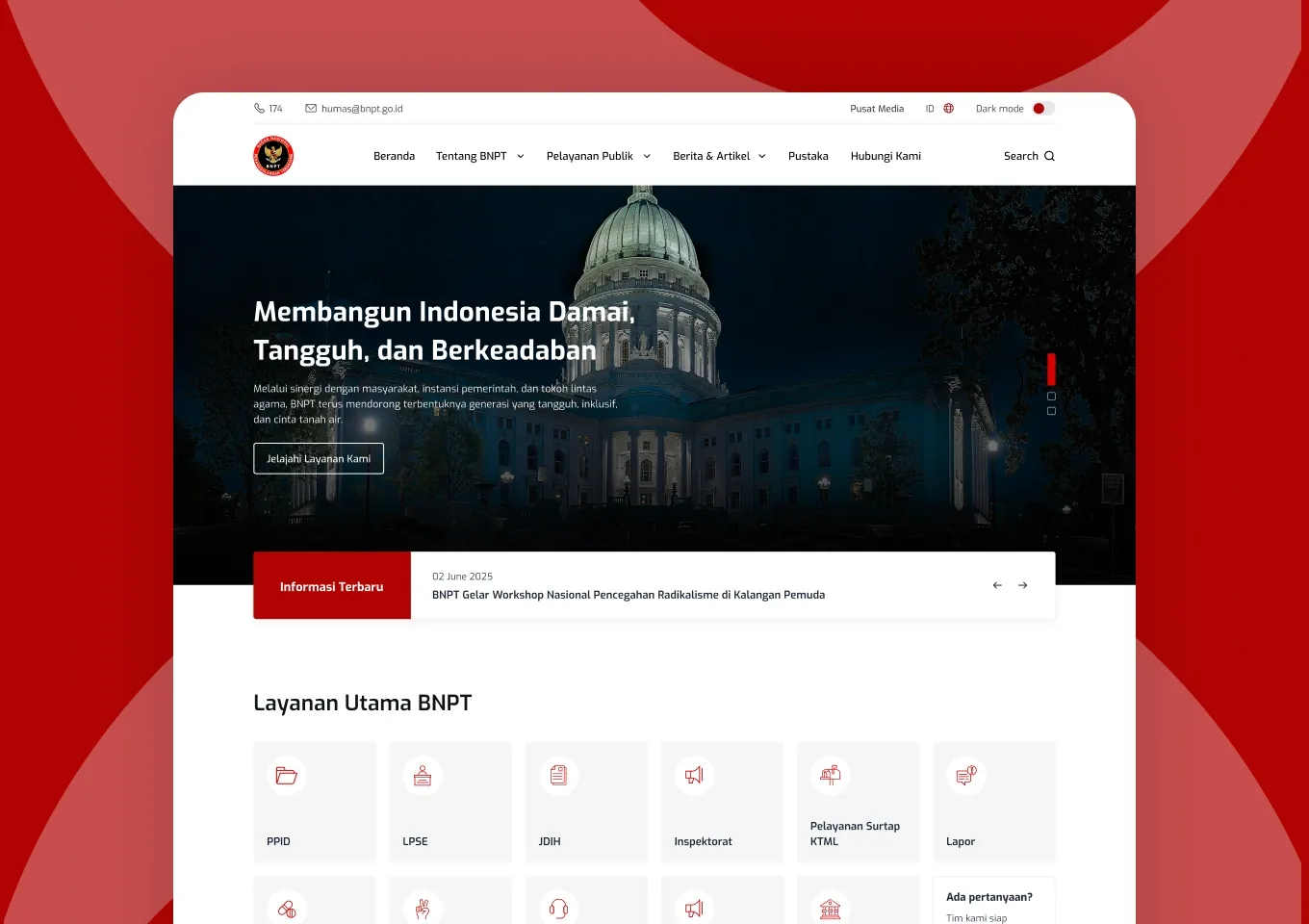
Government & Institutions · 2025
BNPT Official Website
Read more ↗Why Legia
A tidy release flow is usually only noticed when the person who normally runs it is away. These six things make releases repeatable by anyone on your team and keep them safe.
01 · Design
Your team runs it, Legia sets it up. The entire flow is handed over with training.
02 · Engineering
All configuration is kept as code in your repository, readable and continuable by anyone.
03 · Ownership
Built on common, open tools, so you are free to switch vendors without rebuilding.
04 · Ownership
Vulnerability scanning and management of keys and secrets are part of the release flow, not separate work afterwards. Access is set per role and check results are recorded.
05 · Reports
Release frequency, time from finished code to running on the server, recovery time after a problem release, and release failure rate are recorded before the work and measured again afterwards.
06 · Engineering
Documentation of the release flow and a guide for handling failures.
FAQ
Haven't found your answer? Tell us what you need, and the Legia team replies within 1 business day.
Ask the Legia team ↗A DevOps service streamlines how an application is tested and released to servers: automated release flows, consistent environments, monitoring, and rollback mechanisms. Legia sets it up in stages and hands it to your team, with training and the configuration in your repository.
Cost depends on the number of applications handled, the starting state of your release flow, and whether the environments are already in the cloud. Legia gives the figure after the flow assessment stage, which can be taken separately.
No. If your application rarely changes and is released only a few times a year, the cost of setting up an automated flow probably does not pay off. DevOps benefits most when releases are frequent, involve several people, or have failed and been hard to roll back. Legia gives this assessment in the first session, before a scope is drawn up.
Server management keeps the server running, secure, and fast. DevOps streamlines how your application is tested and gets to that server. They are often done together, but answer different problems.
Vulnerability scanning and management of keys and secrets are part of the release flow, with access set per role and check results recorded. The scope of checks is agreed at the flow assessment stage.
Yes, and that is the point. Legia sets up the release flow, and your team runs it. Handover includes training and support until your team releases without help. If needed, support can continue through a monthly support contract or a subscription maintenance scheme, billed separately.
No. Legia builds on common, open tools. All configuration is kept as code in your repository, so any party can read, change, and continue it.
No. The new flow is built in stages and runs alongside the old way until it proves stable. The full switch is only made once your team is confident.
Yes, through the dedicated team service in the IT Support & Consulting pillar. If what you need is a one-off fix with handover, this DevOps service is the better fit.
The whole process, from flow assessment to handover, takes about 9–15 weeks. The highest-impact fixes are done first, with environment consistency and monitoring following, depending on the starting state of your system.