Apps & Software
Does a Mobile App Need Its Own Backend?
Almost every company mobile app needs a backend: a place where data is stored, accounts are managed, and rules are run. The question is not whether, but whether to build a new one or connect to an existing system.
SEO and Content Specialist
2 min read

Short answer: yes, almost always. A mobile app that stores shared data, has user accounts, or sends notifications needs a backend: a server and API where data is stored, accounts are managed, and business rules are run. The only exception is an app that works entirely on a single device. If the company already has a system, the backend can be an API that connects to that system, rather than a new system from scratch.
What a backend does
The app on the phone is only the interface and part of the logic. The important work happens on the server:
| Function | Example |
|---|---|
| Storing shared data | Orders, field reports, documents seen by many users |
| Managing accounts and access rights | Login, user roles, revoking access for employees who leave |
| Running business rules | Multi-level approvals, calculations, data validation |
| Sending notifications | Updates on order status or new tasks |
| Logging activity | Who changed what and when |
| Backup | Data is not lost even if the phone is broken or lost |
Notifications are a clear example. Push notifications to phones are delivered through a Google service (Firebase Cloud Messaging) for Android and an Apple service (Apple Push Notification service) for iOS, and what triggers the sending is your server when something happens, for example when an order changes status.
Putting business rules and important data only in the phone app is risky. An installed app can be taken apart and modified, a risk covered in the OWASP Mobile Application Security guidance, and data on one phone is not visible to other users.
Three common patterns
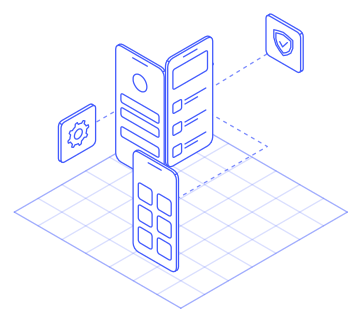
- A new backend. Built together with the app, suitable when no system stores that data yet.
- An API to an existing system. The mobile app becomes a companion to a web system that is already running, using the same data and accounts. This pattern prevents duplicate data.
- A ready-made backend service. For simple needs, a ready-made service can speed up development. Consider where the data is located, the cost as users grow, and how easy it is to move away if that is ever needed.
Things that are often forgotten
- The backend needs maintenance too: security updates, monitoring, and backups, separate from app updates in the app store.
- Server costs run every month, following the number of users and the amount of data.
- Access without a signal requires specific design: data is stored on the phone and then synced to the backend when the signal returns. This adds complexity and needs to be decided from the start.
- One backend for web and mobile makes things easier if a web version is needed later. The choice of app form is discussed in the article Native, Cross-Platform, or Web App.
How Legia does it
In the Mobile App Development service, the backend and API are built together with the app. If the company already has a system, the app is connected to that system and the scope is assessed during requirements mapping. Security is the same as for web apps: role-based login, activity logs, automatic server-side backups, and security checks on the system.